GOWRS launches a new series of webinars
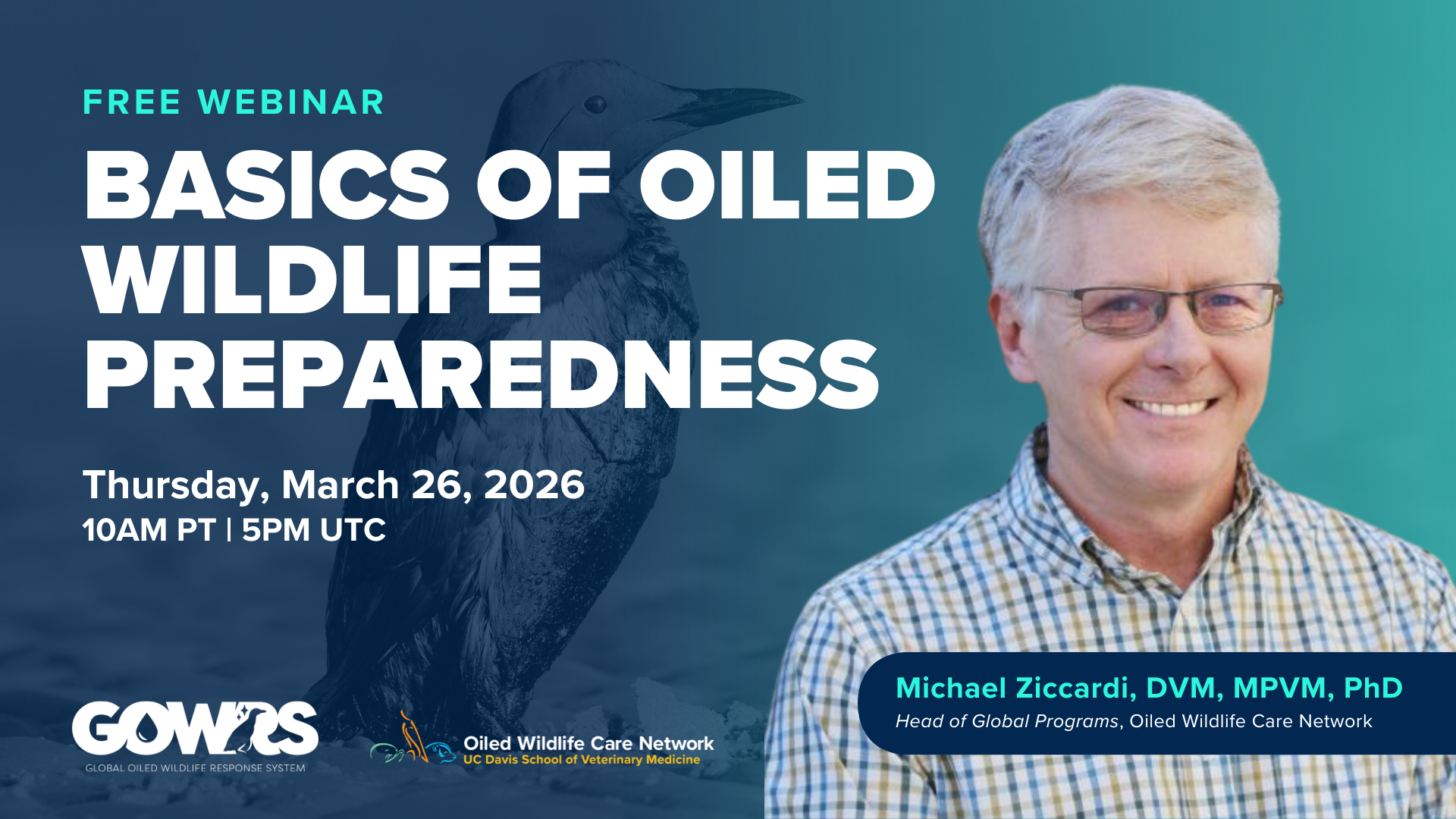
The GOWRS Network was delighted to welcome over 170 attendees to hear Dr Michael Ziccardi, of the Oiled Wildlife Care Network (OWCN) deliver the inaugural GOWRS webinar “Basics of Oiled Wildlife Preparedness” earlier today, 26th March 2026.
The webinar focused on the basics of wildlife preparedness, and is now available on this website to wildlife responders around the world and anyone who wishes to learn more about the topic or would like to brush up on the basics.
This webinar is the first of a series on Preparing and Responding to Oiled Wildlife Incidents. Over the course of the year, members of the GOWRS Network will present on more topics related to oiled wildlife response, preparedness, and rehabilitation. We plan to produce one webinar every three months or so and each webinar will be one hour in length, with a 45 minute presentation and 15 minutes reserved for questions.
Look out for more information on future webinars on our LinkedIn page or on this webpage.
“Basics of Oiled Wildlife Preparedness” The recording is available at the bottom of this page.
What does it actually take to be ready for an oil spill response?
Dr. Michael Ziccardi (OWCN’s Head of Global Programs) walk us through the core elements of readiness, from planning and coordination to response infrastructure, drawing on real-world experience from a world-leading program in oiled wildlife response.
Whether you’re a wildlife professional, student, or simply someone who cares about how we respond to crises affecting animals and ecosystems, this is your opportunity to learn what effective preparedness really looks like.
Our Presenter
Michael Ziccardi DVM MPVM PhD Hon ACZM
Dr. Ziccardi is currently the Director of the Karen C. Drayer Wildlife Health Center, Associate Director of Global Operations for the Oiled Wildlife Care Network,Director of the California Veterinary Emergency Team, and Health Science Clinical Professor for the School of Veterinary Medicine, UC Davis. He received his DVM, MPVM, and PhD in epidemiology from UC Davis, emphasizing free-ranging wildlife health and the effects of petroleum exposure in wildlife. He has been an oil spill response veterinarian and coordinator since 1996, responding to more than 70 spills in the US and abroad, including as Marine Mammal/Sea Turtle lead for NOAA during the Macondo/Deepwater Horizon incident in 2010. He has also worked as a contract veterinarian for California Department of Fish and Game, a wildlife epidemiologist at Lincoln Park Zoo in Chicago, Executive Director of the One Health Institute, Chair of the Global Oiled Wildlife Response System project, Chair of NOAA’s Working Group on Marine Mammal Unusual Mortality Events, and Director of the OWCN.